
Gratitude journaling should not require you to call a painful day “good.” A grounded practice notices what supported you alongside what was difficult. It does not use appreciation to silence grief, anger, uncertainty, or change.
Specific gratitude is usually more meaningful than a generic list. Instead of “family,” write “my sister sent the exact message I needed before the meeting.”
Prompts for ordinary days
- What made today slightly easier?
- Which ordinary comfort did I notice?
- What worked without asking for my attention?
- Which sound, smell, texture, or taste brought me back to the moment?
- What small choice am I glad I made?
- What did my body allow me to do today?
- Which familiar place felt good to return to?
- What problem did I not have to solve alone?
- What made me smile before I could analyze it?
- What would I have missed if I had rushed?
Prompts about other people
- Who offered care in a way that suited me?
- What did someone teach me recently?
- Which conversation stayed with me?
- Who made space for me to be honest?
- Whose work quietly improved my day?
- What kindness could I acknowledge directly?
- Which relationship has become more trusting?
- Who challenged me in a useful way?
- What quality in someone else do I value?
- Who would appreciate hearing “thank you” from me?
Prompts for difficult days
- What helped me endure rather than fix today?
- Where did I find five minutes of relief?
- What remained steady while other things changed?
- What did I learn about what I need?
- Which boundary protected me?
- What expectation can I set down?
- Who or what reminded me I was not alone?
- What difficult truth am I grateful to understand?
- What can be painful and valuable at the same time?
- What do I appreciate without needing it to cancel the hard part?
What research says about gratitude writing
Research is more nuanced than “gratitude makes everyone happier.” A randomized study of 1,337 adults found modest benefits for some outcomes after two weeks of gratitude lists, with effects varying by measure. Another study comparing gratitude lists and longer-form writing suggests that format and personal characteristics can influence the experience.
Treat gratitude as a perspective practice, not a cure or moral obligation. If it feels forced, choose a neutral prompt such as “What supported me today?” or explore other daily reflection questions.
Build a practice that stays honest
Answer one prompt two or three times a week. Name concrete details. Let mixed feelings share the page. Gratitude becomes richer when it remains believable.
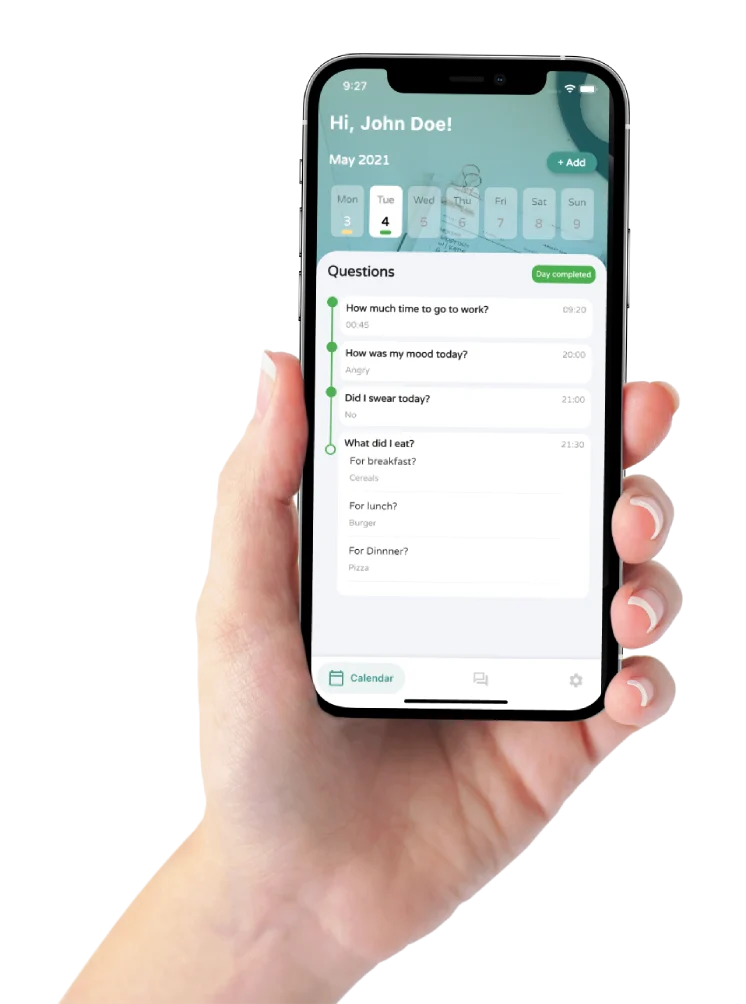
EvereeME lets you schedule a personal gratitude question and look back on the precise moments you chose to remember.