
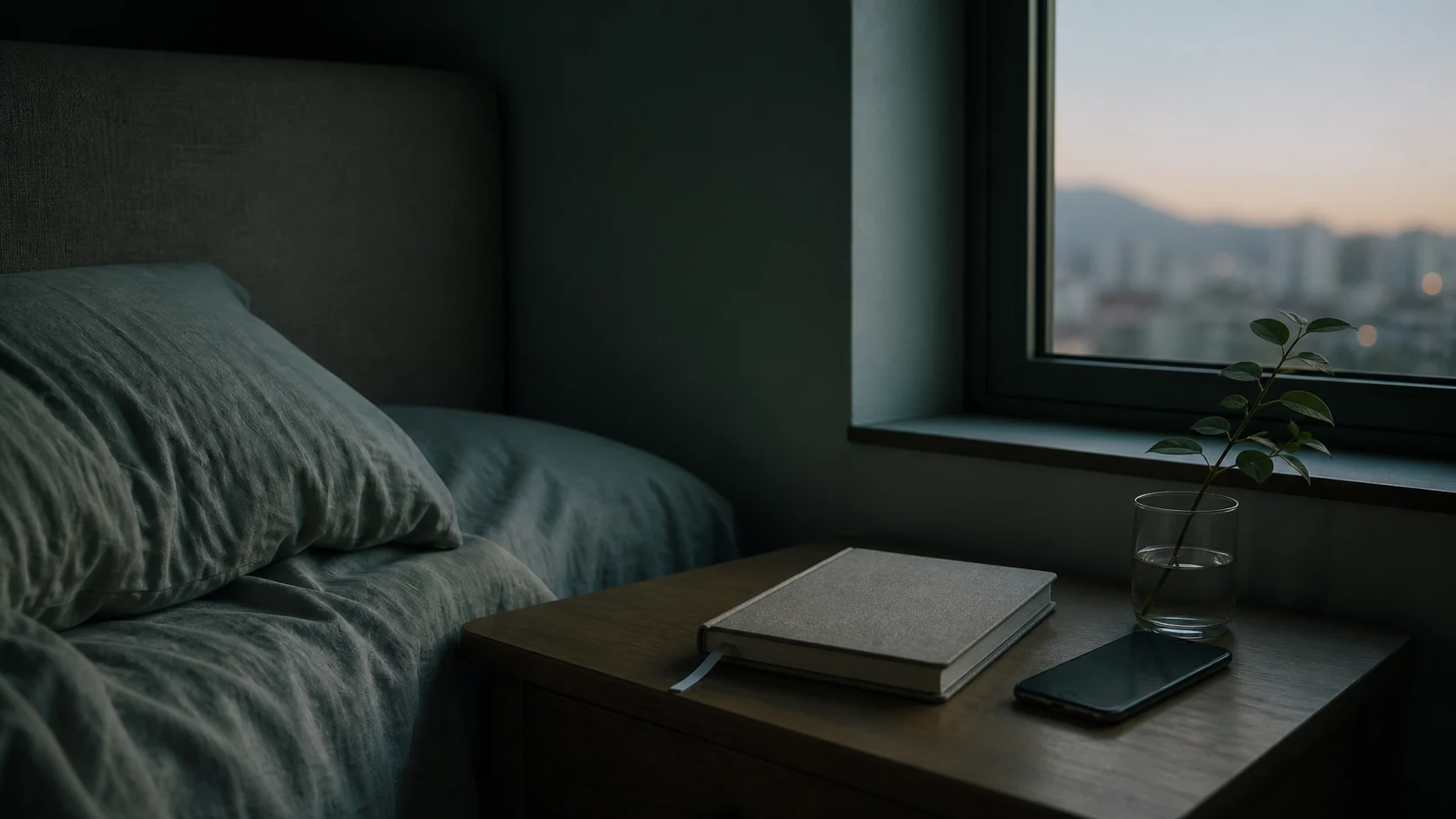
A sleep journal is a daily record of when you slept, how rested you felt, and what may have influenced the night. It can help you replace “I never sleep well” with a more useful view of when sleep changes and what tends to change with it.
It is a reflection tool, not a medical test.
What to record in a sleep journal
Start with only five fields:
- Approximate bedtime
- Approximate wake time
- Estimated time to fall asleep
- Number or length of remembered awakenings
- Sleep quality from one to five
Optionally add one short context note: caffeine later than usual, alcohol, exercise, stress, travel, illness, or screen use in bed.
Do not create a form so detailed that completing it keeps you awake.
Record at two different times
Write sleep timing and quality shortly after waking, while the night is still fresh. Record daytime energy in the afternoon or evening.
Separating the two helps you ask a better question: does perceived sleep quality align with how you functioned later? Sometimes the answer is less direct than expected.
Review after two weeks
Daily analysis magnifies random variation. After 14 days, calculate nothing more complicated than ranges and recurring contexts:
- What was my typical bedtime window?
- Which mornings felt most restored?
- What appeared before difficult nights?
- Did my energy follow sleep duration, sleep quality, or neither?
Then choose one experiment—such as a more consistent wake time—and observe another two weeks. Change one meaningful variable at a time.
How much sleep do adults need?
The CDC recommends at least seven hours of sleep per day for adults aged 18–60, while needs vary with age and individual circumstances. A 2026 CDC data brief reported that 30.5% of U.S. adults slept fewer than seven hours in 2024.
Duration is not the only signal. The CDC also highlights sleep quality, regularity, and symptoms such as repeated waking or feeling tired despite sufficient time in bed.
If sleep problems are persistent, severe, involve breathing interruptions, or interfere with daily life, speak with a healthcare professional. A journal may give that conversation useful context, but it cannot identify a disorder.
Avoid the “perfect sleep score” trap
Consumer devices estimate sleep using indirect signals. Those estimates can be interesting, but a nightly score can also create anxiety. Your own brief answer—“How restored do I feel?”—captures something a sensor cannot fully know.
Use measurements as clues. Never treat one number as a verdict on how the day will go.
Connect sleep with the rest of your life
Sleep rarely exists in isolation. Pair your journal with one additional question about mood, energy, or focus. Our mood tracking guide explains how to compare those answers without overinterpreting them.
EvereeME helps you ask both questions at moments you choose and view the answers together over time.