
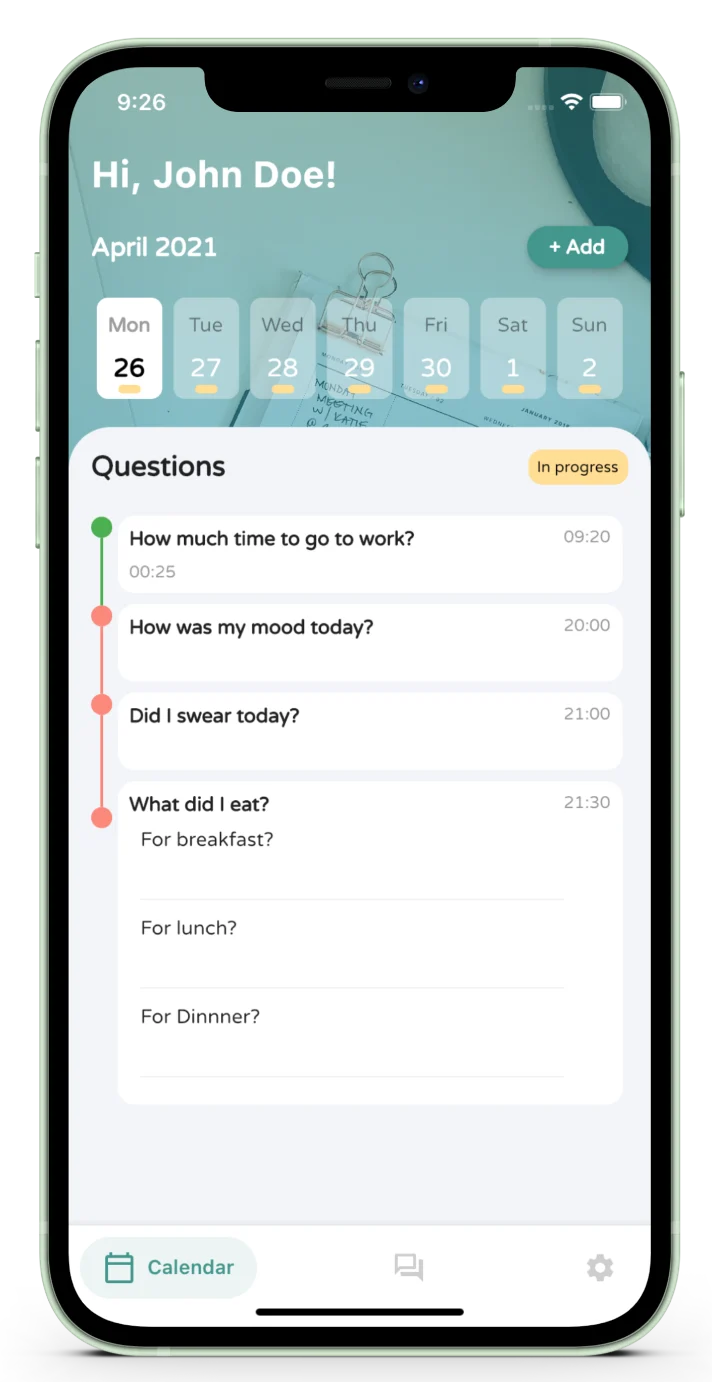
Mood tracking is the practice of recording how you feel at regular moments so you can see patterns over time. The most useful approach is simple: one rating, one optional note, once or twice a day.
Tracking should create perspective, not surveillance.
Choose a scale you can repeat
A five-point scale is usually enough:
- Very low
- Low
- Neutral or mixed
- Good
- Very good
Define the scale in your own words and keep the wording stable. Precision matters less than consistency. A 73/100 mood score may look scientific, but most people cannot reliably distinguish it from 71.
Research on ecological momentary assessment—collecting experiences close to when they happen—uses both numbered categories and visual scales. A 2025 study comparing response formats found that scale design can influence reporting, a reminder to choose one understandable format and stick with it.
Add context, not an essay
A score tells you what. A few words may tell you why.
Useful context can include sleep, social contact, workload, movement, pain, weather, or a significant event. Keep it observational:
2/5 — tense deadline, little lunch, calmer after walking home.
You are not required to explain every emotion. “I do not know” is valid data.
Pick the right moment
If you record only at bedtime, the final hour can color your memory of the whole day. If possible, use one consistent check-in in the afternoon or two brief check-ins—midday and evening.
Smartphone-based momentary assessment is designed to reduce the recall limitations of retrospective questionnaires. In one recent feasibility study, participants completed 923 brief check-ins with high adherence, showing that short prompts can fit into ordinary life when the burden stays low.
Review weekly, not emotionally
Do not redraw your self-image after one difficult day. Wait until you have enough observations, then ask:
- Do lower ratings cluster around a particular time or context?
- What tends to appear before better days?
- Are weekends genuinely different, or do they only feel different?
- Which pattern is actionable?
Treat patterns as hypotheses. “My mood is often lower after short sleep” can lead to a gentle experiment. It does not prove that sleep was the only cause.
When mood tracking becomes unhelpful
Pause or simplify if you find yourself checking the data compulsively, judging ordinary emotions, or changing answers to preserve a trend. You are allowed to track less.
Mood tracking is not a diagnostic tool or emergency support. If you are worried about persistent low mood or safety, contact a qualified health professional or local emergency service.
A useful first question
Ask “How did today feel?” at the same time for two weeks. Use five options and an optional sentence. Then compare the timeline with your sleep journal or daily context.
EvereeME makes this kind of low-friction check-in easy—without public sharing, streak pressure, or a dashboard demanding constant attention.