
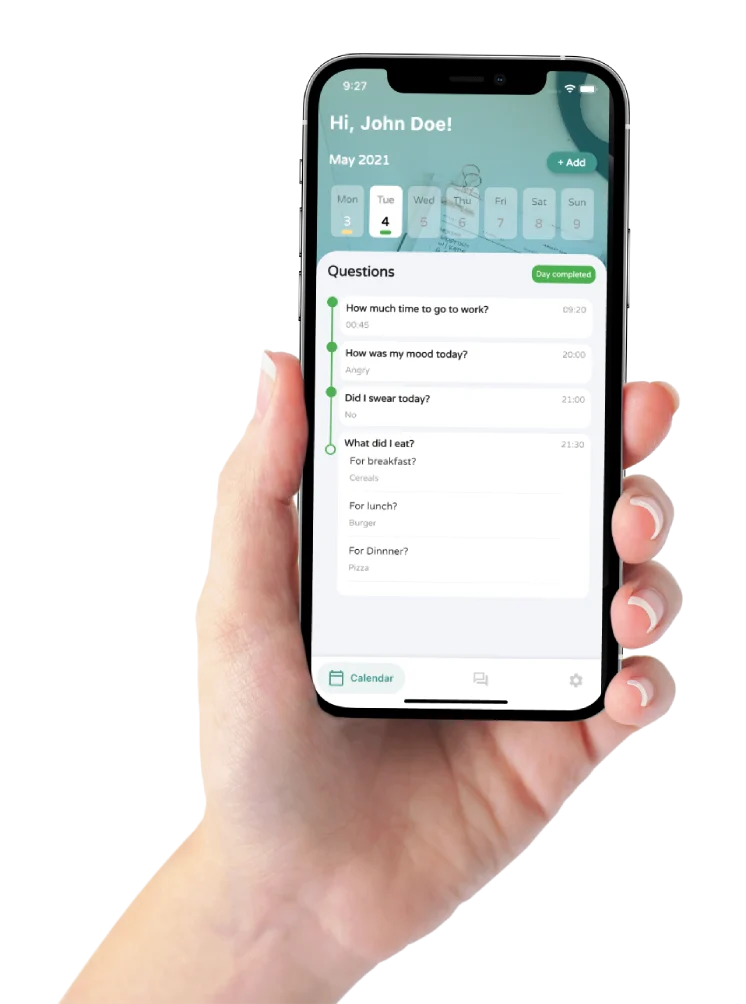
The best habit tracker for iPhone is the one that makes recording effortless, reviewing useful, and returning after a missed day emotionally easy. Feature count matters less than whether the app fits the behavior you want to understand.
Use these seven criteria before committing your history to a tracker.
1. The check-in takes seconds
Tracking is a supporting action, not the habit itself. A good app lets you answer from a clear prompt without navigating dashboards, choosing categories, or maintaining a complex setup.
Test the most tired version of yourself. Could you still record the answer at the end of a long day?
2. Reminders happen in context
A reminder should meet the moment when an answer is possible. A morning question about sleep, an evening question about mood, and a post-lunch question about movement need different timing.
Look for per-question schedules and easy notification control. More reminders do not create more intention.
3. The answer format matches the question
“Did I meditate?” needs yes or no. “How was my energy?” benefits from a scale. “What mattered today?” needs words.
The best tracker supports the smallest appropriate format instead of forcing every part of life into the same checkbox.
4. Review reveals context, not only completion
Calendars and percentages show frequency. They do not always show why behavior changed. A useful history lets you revisit dates, compare answers, and notice the contexts around success or difficulty.
For a broader method, read our guide to personal tracking and the quantified self.
5. Missing a day does not become a crisis
Streaks motivate some people, but they can make one interruption feel like erased progress. Decide whether you want a performance system or an observation system.
If streak pressure has made you abandon trackers before, choose an app built around patterns and return. Here is why habit tracking does not require streaks.
6. Privacy is understandable
Habit data can expose sleep, health, location, routines, and emotional patterns. Review the privacy label, policy, account model, analytics, export, and deletion options.
Our personal tracking privacy checklist covers the questions worth asking.
7. The design becomes quiet
Good tools recede. Avoid interfaces that make you manage widgets, points, currencies, challenges, and social feeds unless those features genuinely support your goal.
After a week, ask: am I paying more attention to my life or to the app?
Who EvereeME is for
EvereeME is a strong fit if you want to track habits alongside mood, sleep, gratitude, and personal questions—with flexible answer types, thoughtful reminders, a private history, and no streak anxiety.
It is deliberately not a competitive productivity game. It is a quiet observation tool for people who want their daily answers to become self-knowledge.